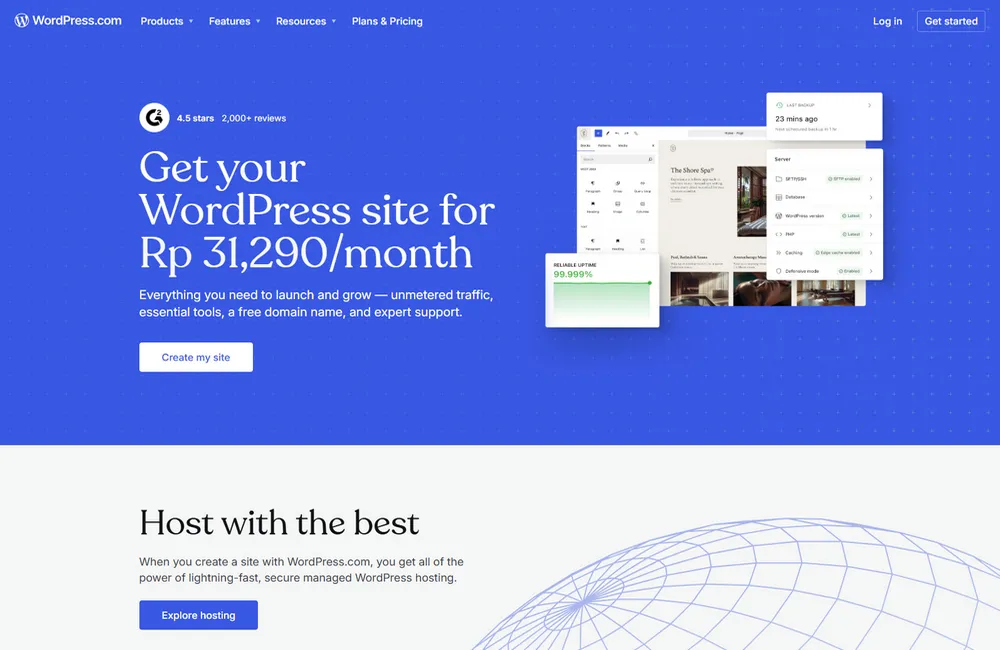
WordPress remains the most widely used content management system in the world, powering a significant portion of all websites online. Its flexibility, ease of use, and extensive ecosystem have made it the default choice for beginners and professionals alike.
However, with the rise of modern website builders and lightweight CMS platforms, many users are questioning whether WordPress is still the best option in 2026.
This review provides a detailed and objective analysis of WordPress, including its features, strengths, weaknesses, and overall performance.
What is WordPress?
WordPress is an open-source content management system written in PHP and powered by a MySQL database. It allows users to create, manage, and publish websites without requiring advanced programming knowledge.
There are two primary versions:
- WordPress.org (self-hosted, full control)
- WordPress.com (hosted, limited customization)
For most professional use cases, the self-hosted version is preferred due to its flexibility and scalability.
Key Features
Plugin Ecosystem
One of the defining features of WordPress is its extensive plugin library. With tens of thousands of plugins available, users can extend functionality without modifying core code.
Common use cases include SEO optimization, security enhancements, caching, analytics integration, and eCommerce functionality.
Themes and Design Flexibility
WordPress supports a wide range of themes, both free and premium. These themes allow users to quickly change the appearance of a website without rebuilding it from scratch.
Advanced users can also create fully custom themes tailored to specific needs.
User-Friendly Interface
The WordPress dashboard is designed to be accessible to non-technical users. The block editor (Gutenberg) enables content creation through a visual interface, reducing the need for manual coding.
SEO Capabilities
WordPress is structured to support search engine optimization out of the box. Features such as clean URL structures, metadata control, and compatibility with SEO plugins make it a strong choice for content-driven websites.
Scalability
WordPress can be used for a wide range of projects, from small personal blogs to large enterprise-level websites. Its modular architecture allows it to scale as the project grows.
Use Cases
WordPress is suitable for various types of websites, including:
- Blogs and personal websites
- Corporate and business websites
- eCommerce stores using WooCommerce
- Portfolio websites
- News and media platforms
Advantages
WordPress offers several key advantages:
- Easy to use, even for beginners
- Highly flexible and customizable
- Large ecosystem of plugins and themes
- Strong global community and support
- Suitable for almost any type of website
Disadvantages
Despite its strengths, WordPress has some limitations:
- Performance can degrade with excessive plugins
- Requires ongoing maintenance and updates
- Security depends on proper configuration
- Some high-quality themes and plugins are paid
- Can feel complex when heavily customized
Performance
WordPress performance depends heavily on how it is configured.
A well-optimized WordPress site can be fast and efficient. However, poor hosting, unoptimized images, and excessive plugin usage can significantly reduce performance.
Proper optimization techniques include caching, using a content delivery network (CDN), and selecting lightweight themes.
Security
WordPress is generally secure, but it requires active maintenance.
Users should ensure that:
- Core files, themes, and plugins are updated regularly
- Only trusted plugins and themes are installed
- Strong authentication practices are used
Security plugins and managed hosting solutions can further improve protection.
WordPress vs Other CMS Platforms
WordPress stands out for its flexibility and ease of use, but it is not always the best choice for every scenario.
It is ideal for users who want a balance between usability and customization. However, developers seeking a lightweight or highly specialized system may prefer alternative CMS platforms.
Final Verdict
WordPress continues to be one of the most powerful and versatile CMS platforms available in 2026.
Its combination of accessibility, flexibility, and community support ensures that it remains relevant despite increasing competition.
While it may require optimization and maintenance, it remains a reliable solution for most website projects.
| Section | Notes | Score |
|---|---|---|
| Features | Extensive plugin and theme ecosystem enabling almost unlimited functionality and customization | 5/5 |
| Ease of Use | Beginner-friendly dashboard with visual editor, though complexity increases with advanced setups | 4.5/5 |
| Performance | Highly dependent on hosting and optimization; can be fast but slows down with excessive plugins | 4/5 |
| Flexibility | Suitable for blogs, business sites, eCommerce, and large-scale platforms with strong scalability | 5/5 |
| Value | Free core software with optional paid themes and plugins, offering strong value for most users | 4.5/5 |
Conclusion
WordPress remains a leading CMS due to its adaptability and extensive ecosystem. It is suitable for both beginners and experienced developers, provided it is properly configured and maintained.
For users seeking a stable and scalable platform, WordPress continues to be a strong choice in 2026.